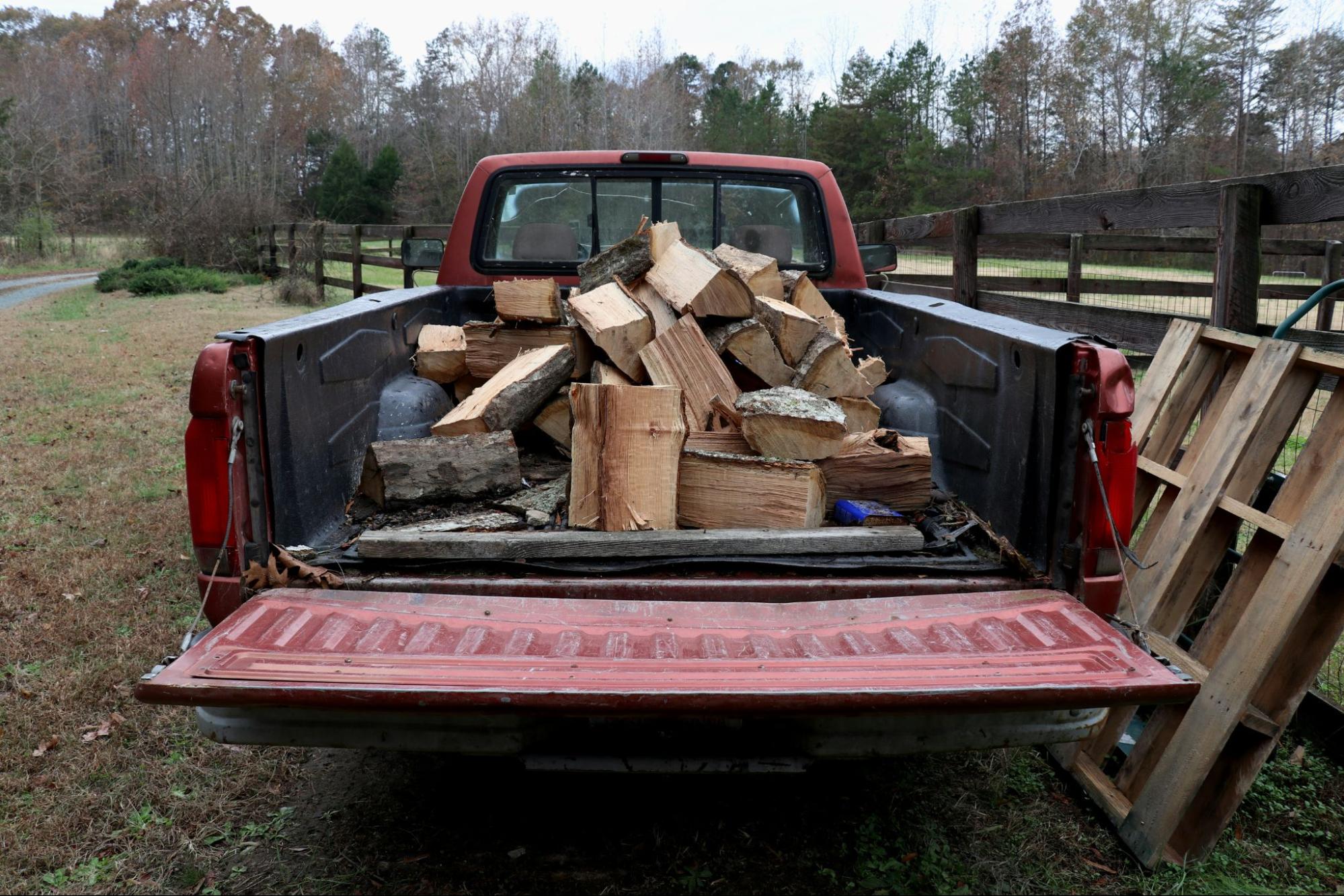
Most advice about securing a load focuses on the heavy stuff, such as pallets, timber and machinery. Yet a lot of what travels in an open ute tray or trailer is light and loose: garden clippings, offcuts, a bucket of fittings, a bundle of rakes and brooms. These loads do not shift in the same way as a heavy one, but they have their own habit, which is leaving the vehicle.
Why the Small Stuff Behaves Differently
The National Transport Commission’s Load Restraint Guide for light vehicles lists the kinds of load that can be blown away by airflow, including garden waste, paper and light plastic. Wind passing over an open tray can lift items that seem too light to matter.
That is why the guide suggests containing light items in a separate box or covering them to stop them being blown off. The idea is simple: anything that could be lifted by the airflow needs something over it or around it.
Open Trays and Trailers
The guide describes several ways to restrain a load, and for open vehicles one option is worth noting. A cargo net in Australia is described there as providing effective restraint, particularly for utes, trailers and other open vehicles. For loads that sit below the sides of the tray, the guide suggests covering them with either a cargo net or a tarpaulin that is tied down so it does not flap in the wind.
Tarpaulins deserve a note. The guide says that for most loads a tarp is not an effective restraint system on its own, though it can be used for very light loads that could be affected by airflow. In other words, a tarp is a cover, and a net is closer to a restraint.
Tools and Equipment
Tools are the classic loose load. A few spanners, a drill case and a handful of fittings can slide around a tray with every corner and brake. The Load Restraint Guide is direct on this, advising that loose equipment, including tools, be restrained in a storage box that is itself adequately restrained. A box that slides around the tray has not solved the problem, only moved it.
The guide also has a view on ropes, recommending them only for light loads such as ladders, plastic pipes or light boxes. For anything heavier, or anything made up of many small pieces, a box, a net or a combination of the two is the more practical choice.
Heavier Items Underneath
When a load mixes weights, the order of packing matters. The guide advises putting heavier items at the bottom and lighter items on top, keeping the centre of gravity low and close to the vehicle’s centre-line, and spreading the load evenly across the width and length of the vehicle.
For a tradie’s tray, this might mean the heavy bags and bulky tools go down first, with the light items in a box or under a net on top. It is a small change in routine, and it makes any restraint do its job more easily.
Checking Along the Way
Securing a load is not finished once the net is on. The guide says to check the load and lashings regularly during the journey, notes that webbing straps can stretch and should be rechecked and re-tensioned, and advises rechecking after dropping off part of a load. A quick look at the first safe stop is a reasonable habit, particularly on a longer trip.
Unloading part of a load changes what remains, and a net that was snug around a full tray may sit looser around half of one.
Keeping It Simple
For most everyday jobs, the answer is a bit of planning, the right restraint for the type of load and a final walk-around before setting off. Sorting the load into what is heavy, what is loose and what is light enough to blow away makes it easy to see what each item needs.